Introduction
There's something truly magical about a plate of golden, perfectly cooked French toast on a weekend morning. This classic breakfast dish transforms simple, everyday ingredients into something special that the whole family will love. Whether you're new to cooking or a seasoned home chef, this easy French toast recipe delivers consistently delicious results every single time.
French toast, also known as eggy bread in some parts of the world, has been a beloved breakfast staple for generations. The beauty of this homemade French toast lies in its simplicity. With just a handful of wholesome ingredients and a few minutes at the stove, you can create a restaurant-quality breakfast right in your own kitchen.
This classic French toast recipe features a perfectly balanced custard mixture that soaks into thick slices of bread, creating a golden exterior with a soft, custardy center. It's naturally sweetened, packed with protein from the eggs, and can be customized with your favorite toppings and spices.
Why You'll Love This Recipe
This French toast stands out for several compelling reasons. First, it's incredibly quick to prepare, making it perfect for busy mornings when you want something more special than cereal but don't have hours to spend in the kitchen. From start to finish, you can have a complete breakfast on the table in under 20 minutes.
The recipe uses clean, whole-food ingredients that you likely already have in your pantry. There are no complicated techniques or special equipment required, just a bowl, a whisk, and a skillet. This makes it an ideal recipe for beginner cooks or anyone looking to build confidence in the kitchen.
Nutritionally, this homemade French toast provides a good balance of carbohydrates for energy, protein from the eggs for satiety, and the opportunity to add healthy fats and fiber through your choice of toppings. Unlike many breakfast pastries or sugary cereals, this recipe gives you control over the sweetness level and quality of ingredients.
The versatility of this classic French toast is another major advantage. You can easily adapt it to suit dietary preferences, seasonal ingredients, or whatever you have on hand. It works beautifully with various types of bread, different milk options, and countless flavor variations.
Ingredients You'll Need
For the French Toast:
- 8 slices of whole grain or sourdough bread, preferably day-old and about 3/4-inch thick
- 4 large eggs
- 3/4 cup milk (dairy or unsweetened plant-based)
- 1 tablespoon pure maple syrup or honey
- 1 teaspoon pure vanilla extract
- 1/2 teaspoon ground cinnamon
- 1/4 teaspoon ground nutmeg (optional)
- Pinch of sea salt
- Grass-fed butter or coconut oil for cooking
For Serving:
- Fresh berries (strawberries, blueberries, raspberries)
- Sliced bananas
- Pure maple syrup
- Greek yogurt or coconut yogurt
- Chopped nuts or seeds
- Nut butter
Ingredient Notes and Substitutions
Bread Selection: The type of bread you choose significantly impacts the final result. Day-old bread works best because it's slightly dried out and absorbs the custard mixture without becoming too soggy. Whole grain bread adds fiber and nutrients, while sourdough provides a pleasant tang and easier digestibility. Brioche or challah creates a richer, more decadent version. Avoid very thin sandwich bread, as it tends to fall apart.
Eggs: The eggs create the custard base that gives French toast its signature texture. They provide high-quality protein, vitamin D, and choline. For the best nutrition and flavor, choose organic, pasture-raised eggs when possible.
Milk Choice: Any milk works in this recipe. Whole dairy milk creates the richest result, while unsweetened almond milk, oat milk, or coconut milk are excellent dairy-free alternatives. Avoid sweetened plant milks, as they can make the French toast too sweet.
Natural Sweetener: A small amount of maple syrup or honey in the custard adds subtle sweetness and helps with browning. This is optional if you prefer to add all your sweetness through toppings.
Spices: Cinnamon is traditional and adds warmth and natural sweetness without calories. Nutmeg provides depth, while vanilla extract enhances all the other flavors. These aromatics also offer antioxidant benefits.
Step-by-Step Instructions
Prepare the Custard Mixture:
Start by cracking the eggs into a shallow dish or wide bowl. A pie dish works perfectly for this purpose. Whisk the eggs thoroughly until the yolks and whites are completely combined and the mixture is uniform in color.
Add the milk, maple syrup or honey, vanilla extract, cinnamon, nutmeg if using, and a pinch of salt to the eggs. Whisk everything together vigorously until well blended. The mixture should be smooth with no streaks of egg white visible.
Prepare Your Cooking Station:
Heat a large skillet or griddle over medium heat. Cast iron works beautifully for even heat distribution, but any non-stick or stainless steel pan will work. Add about one tablespoon of butter or coconut oil and let it melt, swirling to coat the entire cooking surface.
Soak the Bread:
Working with one or two slices at a time, place the bread into the custard mixture. Let it soak for about 20-30 seconds on each side. The bread should absorb the mixture but not become so saturated that it falls apart. Thicker bread can handle a longer soak, while thinner slices need less time.
Gently lift the soaked bread, allowing any excess custard to drip back into the dish. This prevents a soggy result and ensures even cooking.
Cook the French Toast:
Place the soaked bread onto the preheated skillet. Cook for 2-3 minutes on the first side without moving it. You'll know it's ready to flip when the edges look set and the bottom is golden brown. If you peek underneath and it's too pale, give it another 30 seconds.
Flip the bread carefully using a spatula and cook for another 2-3 minutes on the second side until golden brown and cooked through. The French toast should feel slightly firm when gently pressed in the center.
Keep Warm and Repeat:
Transfer the cooked French toast to a plate and keep warm in a 200°F oven while you cook the remaining slices. Add a bit more butter or oil to the pan between batches as needed.
Tips for Perfect French Toast
Use Slightly Stale Bread: Fresh bread can become too soggy when soaked in the custard. If you only have fresh bread, lightly toast it first or leave it out uncovered for a few hours to dry slightly.
Control Your Heat: Medium heat is ideal. Too high, and the outside burns before the inside cooks through. Too low, and you'll have pale, soggy French toast. Adjust as needed based on your stove.
Don't Oversoak: The most common mistake is leaving the bread in the custard too long. A quick dip on each side is usually sufficient. The bread should be coated and moistened but still hold its structure.
Avoid Overcrowding: Leave space between slices in the pan for even cooking and easy flipping. Cook in batches rather than cramming everything in at once.
Test for Doneness: The center should be cooked through, not runny. If you're unsure, you can cut a small slit in the thickest part to check.
Flavor Variations
Cinnamon Roll French Toast: Increase the cinnamon to 1 teaspoon and add a cream cheese drizzle on top for a decadent treat that tastes like cinnamon rolls.
Berry Bliss: Add 1/2 teaspoon of lemon zest to the custard and top with a warm berry compote made from fresh or frozen berries.
Banana Nut: Mash half a ripe banana into the custard mixture and top with sliced bananas and chopped walnuts or pecans.
Pumpkin Spice: Replace the cinnamon and nutmeg with 1 teaspoon of pumpkin pie spice and add 2 tablespoons of pumpkin puree to the custard for a fall-inspired version.
Chocolate Chip: Sprinkle mini dark chocolate chips onto the French toast immediately after flipping, pressing them gently into the surface so they melt slightly.
Savory French Toast: Omit the sweetener, vanilla, and cinnamon. Add a pinch of black pepper and dried herbs. Serve with avocado and tomatoes for a savory breakfast option.
Serving Suggestions
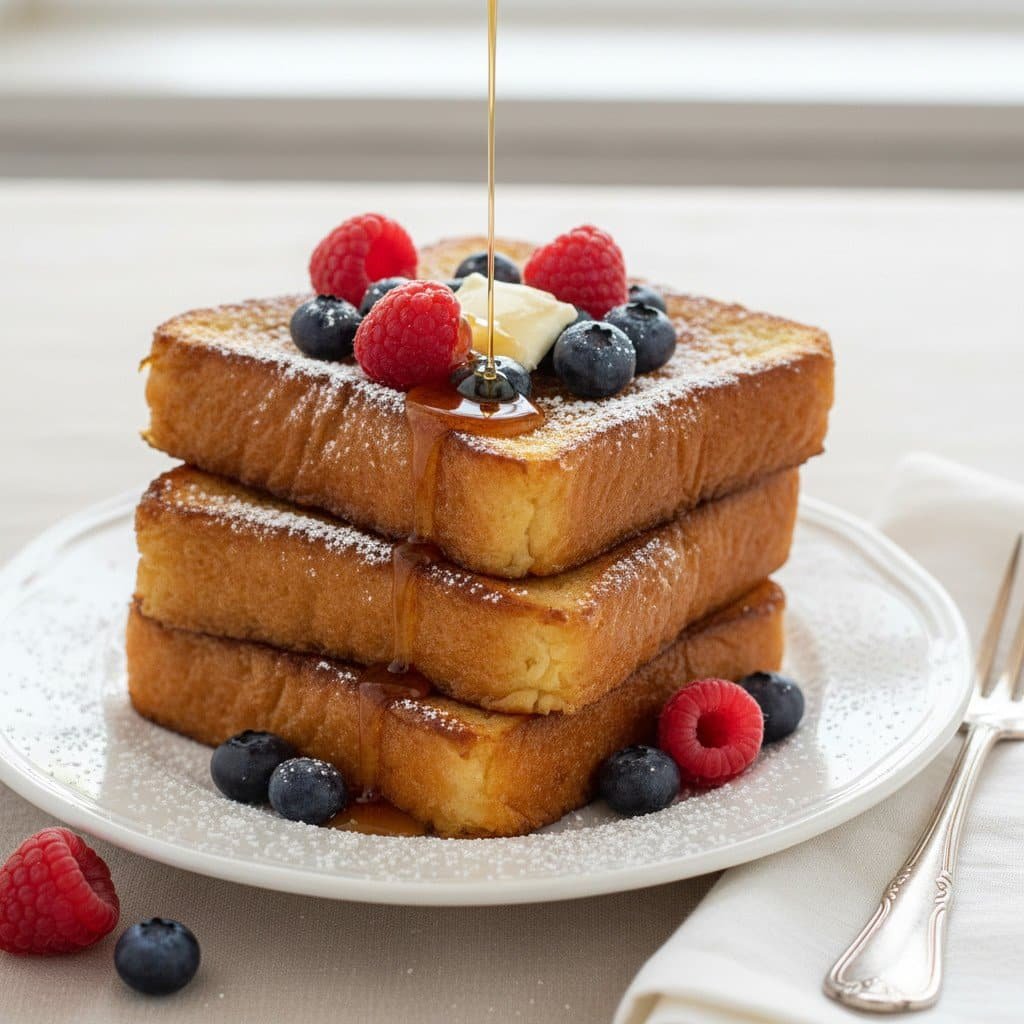
French toast is wonderfully versatile when it comes to serving options. For a classic presentation, stack two or three pieces on a plate, dust with powdered sugar, and drizzle with pure maple syrup. Add a pat of butter on top if desired and serve with fresh berries on the side.
For a more nutritious and balanced meal, top your French toast with a dollop of Greek yogurt or coconut yogurt, which adds protein and probiotics. Scatter fresh berries, sliced bananas, or other seasonal fruit over the top for vitamins, minerals, and fiber. A sprinkle of chopped nuts like almonds, walnuts, or pecans adds healthy fats and a satisfying crunch.
Nut butter is another excellent topping that transforms French toast into a more substantial meal. Almond butter, cashew butter, or natural peanut butter pair beautifully with sliced bananas. For added nutrition, sprinkle chia seeds, hemp hearts, or ground flaxseed over the top.
If you're serving a crowd, create a French toast bar with various toppings and let everyone customize their plate. Include options like different fresh fruits, several types of nuts and seeds, coconut flakes, cacao nibs, and both maple syrup and honey.
For a special occasion brunch, serve alongside scrambled eggs or a vegetable omelet, fresh fruit salad, and herbal tea or freshly squeezed orange juice for a complete, balanced meal.
Storage and Reheating
French toast is best enjoyed fresh and hot off the griddle, but leftovers can be stored successfully for quick breakfasts throughout the week. Allow any leftover French toast to cool completely on a wire rack before storing to prevent condensation and sogginess.
Refrigerator Storage: Place cooled French toast in an airtight container with parchment paper between the slices to prevent sticking. Store in the refrigerator for up to 3 days.
Freezer Storage: For longer storage, freeze French toast for up to 2 months. Arrange cooled slices in a single layer on a baking sheet and freeze until solid, about 1-2 hours. Then transfer to a freezer-safe bag or container with parchment paper between slices.
Reheating Methods: The toaster or toaster oven works wonderfully for reheating French toast, crisping up the exterior while warming the center. Toast on medium heat until warmed through. Alternatively, reheat in a 350°F oven for about 10 minutes, or microwave for 30-60 seconds for a quick option, though this method won't maintain the crispy exterior.
Nutritional Benefits
This homemade French toast provides several nutritional advantages, especially when made with whole grain bread and topped thoughtfully. The eggs provide high-quality complete protein containing all nine essential amino acids, supporting muscle maintenance and keeping you satisfied throughout the morning.
Whole grain bread contributes complex carbohydrates for sustained energy, along with fiber that supports digestive health and helps regulate blood sugar levels. The B vitamins in whole grains support energy metabolism and nervous system function.
The milk adds calcium for bone health and additional protein. If you choose fortified plant-based milk, you'll also get vitamin D and other added nutrients. The small amount of healthy fat from the cooking oil or butter helps with the absorption of fat-soluble vitamins.
By controlling the amount of added sugar and choosing natural sweeteners like maple syrup, you avoid the blood sugar spikes associated with many commercial breakfast foods. The cinnamon not only adds flavor but may also help regulate blood sugar levels.
When topped with fresh fruit, you add vitamins, minerals, antioxidants, and additional fiber. Nuts and seeds contribute healthy fats, protein, and important minerals like magnesium and zinc.
Frequently Asked Questions
Can I make French toast ahead of time?
While best served fresh, you can prepare the custard mixture the night before and store it covered in the refrigerator. You can also fully cook the French toast and reheat it as described above.
Why is my French toast soggy?
Soggy French toast usually results from soaking the bread too long, using bread that's too fresh, or cooking at too low a temperature. Use slightly stale bread, soak briefly, and cook over medium heat.
Can I use egg substitutes?
For an egg-free version, you can try a mixture of mashed banana or applesauce with plant milk and a bit of cornstarch, though the texture will differ from traditional French toast.
What's the best bread thickness?
Slices about 3/4-inch thick work best. Thinner slices can fall apart, while very thick slices may not cook through properly.
Final Thoughts
This easy French toast recipe proves that simple, wholesome ingredients can create something truly special. Whether you're making it for a lazy Sunday brunch, a special occasion breakfast, or meal-prepping for busy weekday mornings, this classic French toast delivers comfort, nutrition, and delicious flavor in every bite.
The beauty of mastering this basic recipe is that it opens the door to endless variations and creativity. Once you're comfortable with the technique, you can experiment with different breads, spices, and toppings to create your own signature version.
Remember that the best French toast starts with quality ingredients, proper technique, and a little patience. Don't rush the process, maintain the right temperature, and you'll be rewarded with golden, crispy-on-the-outside, custardy-on-the-inside perfection every time. Enjoy this timeless breakfast classic with the people you love!
French Toast Recipe
This French toast is golden on the outside, soft in the middle, and easy to make for breakfast.
Ingredients
- 8 slices bread
- 4 large eggs
- 1/2 cup milk
- 1 teaspoon vanilla extract
- 1/2 teaspoon ground cinnamon
- 1/4 teaspoon salt
- 2 tablespoons butter
- Maple syrup for serving
- Powdered sugar for serving
Instructions
- In a shallow bowl, whisk together eggs, milk, vanilla extract, cinnamon, and salt until well combined.
- Heat a large skillet or griddle over medium heat and add 1 tablespoon of butter.
- Dip each bread slice into the egg mixture, coating both sides evenly but not soaking too long.
- Place the coated bread slices onto the heated skillet and cook for 2-3 minutes per side until golden brown.
- Add more butter to the skillet as needed for remaining slices.
- Serve hot with maple syrup and a dusting of powdered sugar.
Equipment
- Shallow bowl
- Whisk
- Large skillet or griddle
- Spatula
Notes
- Use day-old bread for best results as it absorbs the egg mixture better without becoming soggy.
- Brioche, challah, or thick-sliced white bread work wonderfully for French toast.
- Keep cooked slices warm in a 200 degrees F oven while finishing the batch.
- Can be frozen and reheated in a toaster for quick breakfasts.