Introduction
If you're searching for a foolproof soda bread recipe that delivers authentic Irish flavor without the wait, this Traditional Irish Soda Bread is your answer. This beloved no yeast bread has been a staple in Irish kitchens for generations, offering a wonderfully simple approach to homemade bread that anyone can master. Unlike traditional yeast breads that require kneading and rising time, this quick bread comes together in minutes and bakes into a beautifully crusty loaf with a tender, slightly dense crumb.
The magic behind Irish soda bread lies in its simplicity. With just four essential ingredients and a hot oven, you'll have fresh bread on your table in under an hour. The chemical reaction between buttermilk and baking soda creates the leavening action, producing a distinctive tangy flavor and satisfying texture that pairs perfectly with everything from morning eggs to hearty vegetable soups. Whether you're celebrating St Patrick's Day or simply want to enjoy wholesome homemade bread any day of the week, this recipe delivers authentic results every single time.
Why You'll Love This Recipe
This traditional Irish soda bread recipe checks all the boxes for busy home cooks who value both quality and convenience. The absence of yeast means no proofing time, no waiting around, and no special equipment needed. You can literally go from pantry to oven in 10 minutes, making it one of the most accessible bread recipes available.
The ingredient list celebrates whole-food simplicity at its finest. We're using nutrient-dense whole wheat flour alongside all-purpose flour for added fiber, vitamins, and minerals. Buttermilk provides probiotics and tangy richness, while the minimal added fat keeps this bread light yet satisfying. The result is a hearty loaf that nourishes your body while delighting your taste buds.
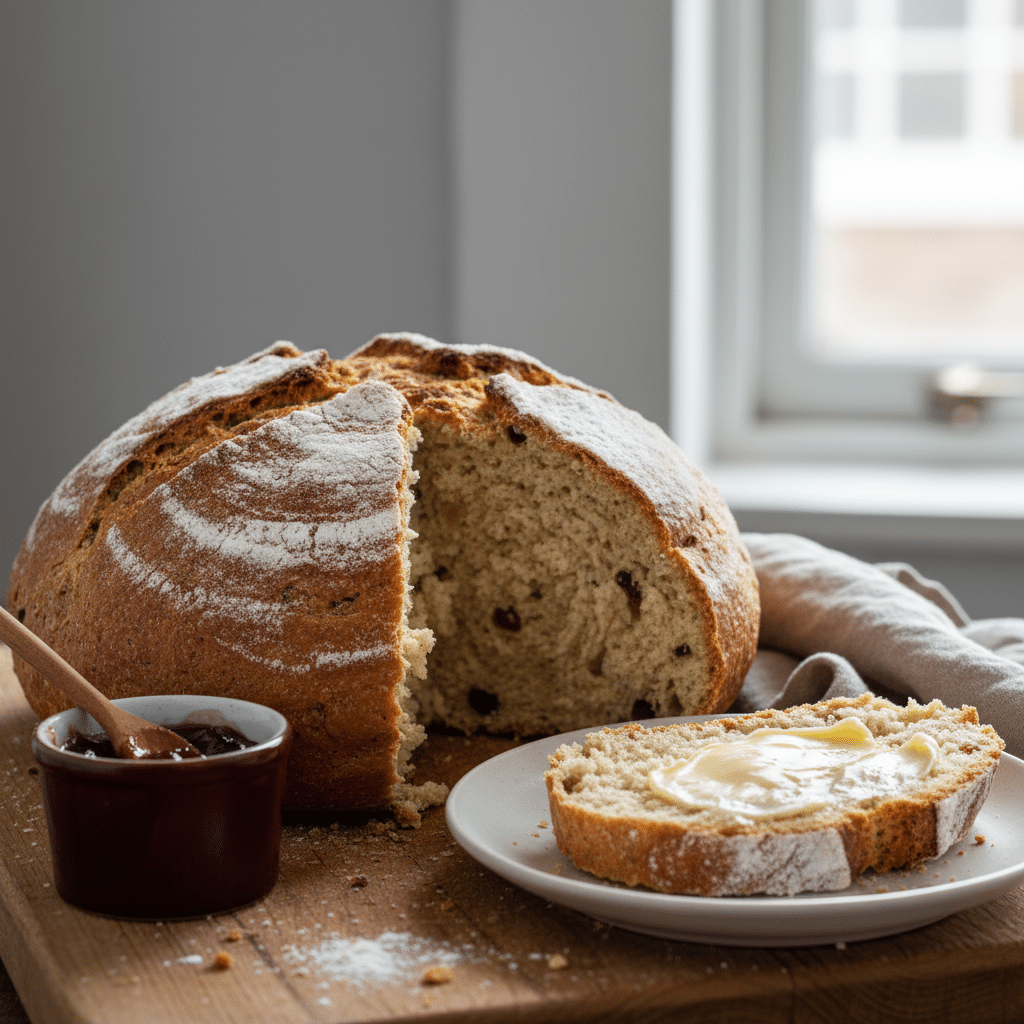
Beyond its practical benefits, there's something deeply satisfying about pulling a golden-brown loaf from your oven, its cross-cut top cracked open to reveal steaming, tender bread inside. This is comfort food with history, a connection to generations of Irish cooks who relied on these same simple ingredients to feed their families.
Ingredient Notes
All-Purpose Flour: Forms the base structure of your soda bread. For best results, measure by spooning flour into your measuring cup and leveling off, rather than scooping directly from the bag which can compact the flour.
Whole Wheat Flour: Adds nutritional value, fiber, and a subtle nutty flavor. You can substitute with additional all-purpose flour if needed, though the whole wheat contributes to the bread's characteristic hearty texture and boosts the mineral content significantly.
Baking Soda: The essential leavening agent that reacts with the acidic buttermilk to create carbon dioxide bubbles, giving your bread its rise. Make sure your baking soda is fresh (check the expiration date) for optimal results.
Salt: Enhances all the flavors and balances the slight bitterness of baking soda. Fine sea salt or regular table salt both work perfectly.
Buttermilk: The acidic component that activates the baking soda while adding moisture and tangy flavor. Traditional buttermilk is cultured, providing beneficial probiotics. If you don't have buttermilk, you can make a substitute by adding 1 tablespoon of lemon juice or vinegar to regular milk and letting it sit for 5 minutes.
Optional Add-ins: While traditional soda bread is plain, many families add raisins or currants for a touch of natural sweetness. Some recipes include caraway seeds for an earthy, aromatic note. These additions are entirely optional and based on personal preference.
Kitchen Equipment Needed
The beauty of this quick bread recipe lies in its minimal equipment requirements. You'll need:
- Large mixing bowl
- Measuring cups and spoons
- Wooden spoon or sturdy spatula
- Baking sheet or cast-iron skillet
- Parchment paper (optional but helpful)
- Sharp knife for scoring
- Cooling rack
No stand mixer, bread machine, or special pans required. This is bread-making at its most accessible.
Step-by-Step Instructions
Preheat and Prepare: Begin by preheating your oven to 425°F (220°C). Line a baking sheet with parchment paper or lightly dust it with flour. The high temperature is essential for creating that signature crispy crust while keeping the interior tender.
Mix Dry Ingredients: In your large mixing bowl, whisk together 2 cups all-purpose flour, 2 cups whole wheat flour, 1 teaspoon baking soda, and 1 teaspoon salt. Make sure the baking soda is evenly distributed throughout the flour mixture, as this ensures even rising.
Add Buttermilk: Create a well in the center of your dry ingredients and pour in 1¾ cups of buttermilk. Using a wooden spoon or your hands, mix the ingredients together with a light touch. The key here is to work quickly and avoid overmixing. Stir just until the dough comes together into a shaggy, slightly sticky mass. The dough should be soft but manageable. If it seems too dry and won't come together, add an extra tablespoon or two of buttermilk. If it's too wet and sticky, sprinkle in a bit more flour.
Shape the Loaf: Turn the dough out onto a lightly floured surface. With floured hands, gently pat and shape it into a round loaf about 7-8 inches in diameter and roughly 2 inches high. Don't knead the dough like you would yeast bread. Gentle handling preserves the tender texture. Transfer the shaped loaf to your prepared baking sheet.
Score the Top: Using a sharp knife, cut a deep cross into the top of the loaf, about ½ inch deep. This traditional marking isn't just decorative. It helps heat penetrate to the center of the loaf and allows the bread to expand properly during baking. According to Irish tradition, the cross also "lets the fairies out" and blesses the bread.
Bake: Place the loaf in your preheated oven and bake for 35-45 minutes. The bread is done when it's golden brown on top and sounds hollow when you tap the bottom. If you have an instant-read thermometer, the internal temperature should reach about 200°F (93°C).
Cool: Transfer the baked loaf to a cooling rack. While it's tempting to slice into it immediately, letting it cool for at least 10-15 minutes allows the interior crumb to set properly and makes slicing much easier.
Serving Suggestions
Traditional Irish soda bread shines in countless serving scenarios. For breakfast, serve thick slices toasted with grass-fed butter and your favorite fruit preserves. The slightly tangy flavor pairs beautifully with sweet toppings, creating a satisfying balance.
This quick bread is the perfect accompaniment to soups and stews. Its sturdy texture holds up wonderfully for dipping into hearty vegetable soup, lentil stew, or creamy potato leek soup. The bread's ability to soak up flavorful broths without falling apart makes it ideal for cozy, comforting meals.
For lunch, use slices as a base for open-faced sandwiches. Top with mashed avocado, sliced tomatoes, and fresh greens, or spread with hummus and layer with roasted vegetables. The bread's firm texture provides an excellent foundation for various toppings.
Soda bread also makes an appearance at traditional Irish tea time. Serve it alongside a pot of strong tea with butter and honey for a simple yet satisfying afternoon snack. The wholesome ingredients provide sustained energy without the crash that comes from more processed baked goods.
Storage and Freshness Tips
Irish soda bread is best enjoyed within 2-3 days of baking. Because it contains no preservatives and minimal fat, it can dry out more quickly than commercial breads. Store your cooled loaf wrapped in a clean kitchen towel or placed in a paper bag at room temperature. Avoid plastic bags, which can make the crust soft and chewy rather than crisp.
If your bread does become slightly stale, don't discard it. Toasting revives the texture beautifully, and day-old soda bread makes excellent breadcrumbs for coating or topping dishes. Simply pulse dried pieces in a food processor for fresh, homemade breadcrumbs.
For longer storage, slice the bread and freeze individual portions in freezer bags. Frozen slices can go directly into the toaster, making for quick breakfasts on busy mornings. Properly wrapped, soda bread keeps well in the freezer for up to 3 months.
Recipe Variations
White Soda Bread: For a lighter version, use all all-purpose flour instead of the whole wheat blend. The texture will be slightly more delicate and the color paler.
Seeded Soda Bread: Add ¼ cup of mixed seeds (sunflower, pumpkin, flax, or sesame) to the dry ingredients for extra nutrition, texture, and nutty flavor.
Fruit and Nut Soda Bread: Fold in ½ cup raisins or dried cranberries and ¼ cup chopped walnuts or pecans for a slightly sweet variation that's wonderful for breakfast.
Herb and Garlic Soda Bread: Add 2 tablespoons of fresh chopped herbs (rosemary, thyme, or chives) and 2 minced garlic cloves for a savory twist that pairs perfectly with soups.
Oat Soda Bread: Replace ½ cup of the flour with rolled oats for additional fiber and a pleasant chewy texture.
Nutrition Highlights
This traditional Irish soda bread offers several nutritional benefits that make it a smart choice for health-conscious bakers. The combination of whole wheat and all-purpose flour provides a good balance of fiber, B vitamins, iron, and magnesium. Whole wheat flour contains the entire grain kernel, including the nutrient-rich bran and germ, delivering significantly more fiber than white flour alone.
Buttermilk contributes protein, calcium, and beneficial probiotics that support digestive health. Despite its name, buttermilk is actually lower in fat than regular milk, making this bread relatively light while still maintaining moisture and flavor.
The minimal added fat in this recipe keeps it heart-healthy, and the absence of refined sugars means it won't cause dramatic blood sugar spikes. Each slice provides sustained energy from complex carbohydrates, making it an excellent choice for active individuals or anyone seeking wholesome, satisfying nutrition.
Common Questions and Troubleshooting
Why is my soda bread dense? Overmixing is the most common culprit. Handle the dough gently and mix just until combined. Also ensure your baking soda is fresh and active.
Can I make this dairy-free? Yes! Use a plant-based buttermilk substitute by mixing non-dairy milk with lemon juice or vinegar.
My bread cracked in unexpected places. What happened? This usually means the oven temperature was too high or the dough was handled too much. Make sure your oven is properly calibrated.
Can I make smaller loaves? Absolutely. Divide the dough in half and shape into two smaller rounds. Reduce baking time to 25-30 minutes.
Is soda bread supposed to be crumbly? A slight crumbliness is normal and traditional. However, if it's excessively dry and falling apart, you may need slightly more buttermilk next time.
Final Thoughts
Traditional Irish soda bread represents everything wonderful about simple, honest baking. This no yeast bread proves that you don't need complicated techniques or hours of waiting to create something truly special. With wholesome ingredients, minimal effort, and maximum flavor, it's a recipe you'll return to again and again.
Whether you're honoring your Irish heritage, looking for a quick bread solution for busy weeknights, or simply want to fill your kitchen with the irresistible aroma of fresh-baked bread, this soda bread recipe delivers. The crispy crust, tender crumb, and subtle tang create a perfect canvas for both sweet and savory toppings, making it versatile enough for any meal.
Once you experience how easy and rewarding this quick bread can be, you'll wonder why you ever thought bread-making was complicated. So preheat that oven, gather your simple ingredients, and discover the joy of traditional Irish soda bread in your own kitchen.
Traditional Irish Soda Bread Recipe
Prep Time: 10 minutes
Cook Time: 40 minutes
Total Time: 50 minutes
Yield: 1 loaf (8-10 slices)
Ingredients
- 2 cups all-purpose flour
- 2 cups whole wheat flour
- 1 teaspoon baking soda
- 1 teaspoon salt
- 1¾ cups buttermilk (plus extra if needed)
Instructions
-
Preheat oven to 425°F (220°C). Line a baking sheet with parchment paper.
-
In a large bowl, whisk together both flours, baking soda, and salt.
-
Make a well in the center and pour in buttermilk. Mix with a wooden spoon until a shaggy dough forms, adding more buttermilk by the tablespoon if too dry.
-
Turn dough onto a floured surface and shape gently into a 7-8 inch round loaf.
-
Place on prepared baking sheet. Cut a deep cross (½ inch deep) into the top with a sharp knife.
-
Bake 35-45 minutes until golden brown and hollow-sounding when tapped on the bottom.
-
Cool on a wire rack for at least 15 minutes before slicing.
-
Serve warm or at room temperature with butter, preserves, or alongside your favorite soup.
Storage: Keep wrapped in a kitchen towel at room temperature for 2-3 days, or freeze sliced portions for up to 3 months.
Traditional Irish Soda Bread Recipe
A no-yeast quick bread with a crisp crust and tender crumb, ready fast for breakfast or alongside soups.
Ingredients
- 4 cups all-purpose flour
- 1 teaspoon baking soda
- 1 teaspoon salt
- 1 3/4 cups buttermilk
Instructions
- Preheat oven to 425 degrees F and lightly grease a baking sheet.
- In a large bowl, whisk together the flour, baking soda, and salt.
- Make a well in the center and pour in the buttermilk.
- Using a wooden spoon or your hands, mix until a shaggy dough forms.
- Turn the dough out onto a lightly floured surface and knead gently for about 30 seconds, just until it comes together.
- Shape the dough into a round loaf about 7 inches in diameter and place on the prepared baking sheet.
- Using a sharp knife, cut a deep cross about 3/4 inch deep across the top of the loaf.
- Bake for 35 to 40 minutes until the bread is golden brown and sounds hollow when tapped on the bottom.
- Transfer to a wire rack and let cool for at least 10 minutes before slicing.
- Serve warm or at room temperature.
Equipment
- Large mixing bowl
- Baking sheet
- Whisk
- Wooden spoon
- Sharp knife
- Wire cooling rack
Notes
- Do not overwork the dough or the bread will be tough.
- The cross cut on top helps the bread bake evenly and allows heat to penetrate the center.
- Best eaten the same day, but can be stored wrapped in a kitchen towel for up to 2 days.
- For a richer version, add 2 tablespoons of melted butter to the dough.
- Traditional Irish soda bread does not contain raisins or caraway seeds.