Introduction
Deviled eggs are a timeless classic that never goes out of style. These protein-packed bites feature tender hard-boiled eggs filled with a creamy, tangy mixture that's both satisfying and delicious. Whether you're preparing for a holiday gathering, a casual potluck, or simply looking for a nutritious snack, this classic deviled eggs recipe delivers every time.
What makes this easy deviled eggs recipe so appealing is its simplicity and versatility. With just a handful of wholesome ingredients, you can create an impressive party appetizer that looks elegant yet requires minimal effort. The combination of smooth egg yolks, creamy Greek yogurt or mayonnaise, tangy mustard, and a hint of seasoning creates the perfect balance of flavors that keeps guests coming back for more.
This recipe focuses on clean, nutrient-dense ingredients that provide quality protein, healthy fats, and essential vitamins. Eggs are naturally rich in choline, selenium, and B vitamins, making deviled eggs not just tasty but genuinely nourishing. Let's explore how to make the creamiest, most flavorful deviled eggs that will become your go-to recipe for any occasion.
Why You'll Love This Recipe
This classic deviled eggs recipe stands out for several compelling reasons. First, it's incredibly straightforward, requiring no special equipment beyond a pot for boiling eggs and a bowl for mixing. Even beginners can achieve professional-looking results with minimal kitchen experience.
The ingredient list is refreshingly simple and focuses on whole foods you likely already have in your kitchen. Unlike many party appetizers that rely on processed ingredients, these deviled eggs use real food to create authentic flavor. The creamy filling comes together in minutes, and the recipe is easily doubled or tripled for larger gatherings.
Another advantage is the make-ahead convenience. You can prepare deviled eggs several hours or even a day in advance, making them perfect for busy hosts who want to minimize last-minute kitchen stress. They travel well to potlucks and outdoor events, and they're naturally gluten-free and low in carbohydrates, accommodating various dietary preferences.
The customization possibilities are endless. Once you master the basic deviled egg filling, you can experiment with different seasonings, toppings, and flavor variations to keep things interesting. From classic presentations to creative twists, this recipe serves as the perfect foundation.
Ingredients
For the Eggs:
- 12 large eggs (preferably organic, pasture-raised)
- Water for boiling
- Ice water for cooling
For the Filling:
- 1/2 cup mayonnaise (or Greek yogurt for a lighter option)
- 2 teaspoons Dijon mustard
- 2 teaspoons apple cider vinegar (or white vinegar)
- 1/4 teaspoon sea salt
- 1/8 teaspoon black pepper
- 1/8 teaspoon garlic powder (optional)
For Garnish:
- Paprika (sweet or smoked)
- Fresh chives or parsley, finely chopped
- Additional black pepper
Ingredient Notes and Substitutions
Eggs: Choose the freshest organic, pasture-raised eggs you can find for the best nutrition and flavor. Interestingly, slightly older eggs (about a week old) are actually easier to peel than very fresh eggs, so plan accordingly if possible.
Mayonnaise: You can use traditional mayonnaise, avocado oil mayonnaise for a healthier fat profile, or substitute half or all of it with plain Greek yogurt for added protein and a tangier flavor. Greek yogurt reduces calories while increasing the probiotic content.
Mustard: Dijon mustard provides a smooth, sophisticated flavor, but yellow mustard works perfectly well for a more traditional taste. Whole grain mustard adds interesting texture if you prefer a rustic presentation.
Vinegar: Apple cider vinegar adds a subtle complexity and comes with potential health benefits, but any vinegar (white, white wine, or even lemon juice) will provide the necessary acidity to balance the rich egg yolks.
Seasonings: The basic salt, pepper, and paprika combination is classic, but feel free to experiment with onion powder, cayenne pepper for heat, or fresh herbs like dill for different flavor profiles.
Step-by-Step Instructions
Preparing Perfect Hard-Boiled Eggs
Place the eggs in a single layer in a large pot. Add enough cold water to cover the eggs by about one inch. This ensures even cooking and prevents cracking.
Place the pot over high heat and bring the water to a full rolling boil. Once boiling, immediately remove the pot from heat and cover it with a tight-fitting lid.
Let the eggs sit in the hot water for 12 minutes for large eggs. This timing produces fully cooked yolks that are creamy yellow without any green ring around the edge.
While the eggs cook, prepare an ice bath by filling a large bowl with ice and cold water. This stops the cooking process and makes peeling much easier.
After 12 minutes, use a slotted spoon to transfer the eggs to the ice bath. Let them cool completely for at least 5 minutes, or up to 15 minutes for easier handling.
Peeling and Preparing the Eggs
Once cooled, gently tap each egg on a hard surface to crack the shell all around. Roll the egg gently under your palm to loosen the shell further.
Start peeling from the wider end where the air pocket is located. The shell should come off in large pieces. Rinse under cool water to remove any remaining shell fragments.
Pat the peeled eggs dry with a clean kitchen towel or paper towel. Slice each egg in half lengthwise using a sharp knife, wiping the blade clean between cuts for neat presentation.
Carefully remove the yolks and place them in a medium mixing bowl. Arrange the egg white halves on your serving platter, cut side up.
Making the Creamy Filling
Add the mayonnaise (or Greek yogurt), Dijon mustard, vinegar, salt, pepper, and garlic powder (if using) to the bowl with the egg yolks.
Using a fork, mash the yolks thoroughly, breaking up any lumps. Continue mashing and stirring until the mixture becomes completely smooth and creamy, with no visible chunks remaining.
For an extra-smooth filling, you can use a food processor or hand mixer, but a fork works perfectly well with a bit of patience. The mixture should be creamy enough to pipe or spoon easily but thick enough to hold its shape.
Taste the filling and adjust seasonings as needed. Some prefer more tang (add vinegar or mustard), more richness (add mayonnaise), or more seasoning (add salt and pepper).
Filling and Garnishing
You can fill the egg whites using two methods. For a casual presentation, simply spoon the yolk mixture into each egg white half, mounding it slightly in the center.
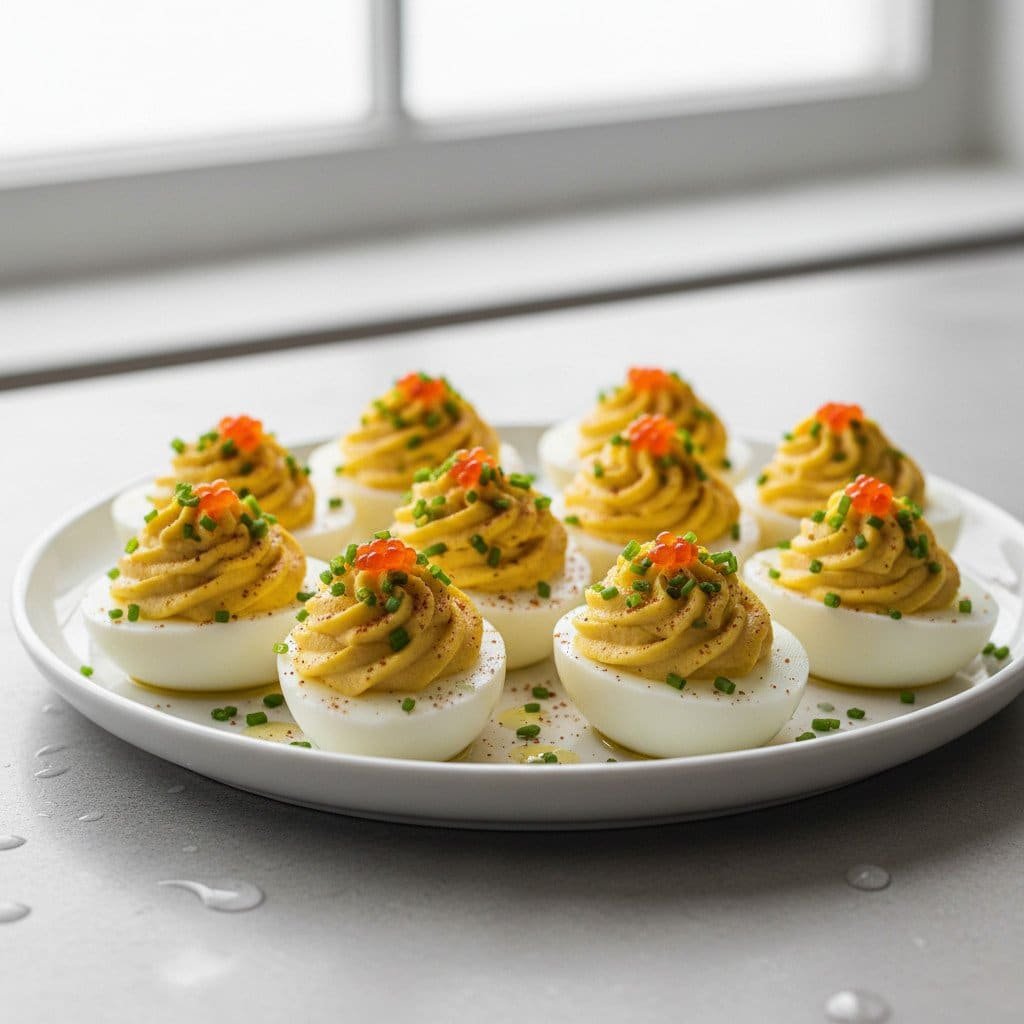
For a more elegant presentation, transfer the filling to a piping bag fitted with a large star tip. Pipe the filling into each egg white half with a swirling motion, creating an attractive peak.
If you don't have a piping bag, use a plastic storage bag with one corner snipped off, or even a sturdy plastic sandwich bag works in a pinch.
Once all eggs are filled, sprinkle lightly with paprika for color and classic flavor. Add freshly chopped chives or parsley for a pop of green and fresh flavor.
Finish with a light grinding of black pepper if desired. Refrigerate until ready to serve, at least 30 minutes to allow flavors to meld.
Serving Suggestions
Deviled eggs shine as a party appetizer at virtually any gathering. Arrange them on a decorative platter or specialized deviled egg tray for an impressive presentation. They're perfect for holiday celebrations like Easter, Thanksgiving, and Christmas, where their classic appeal fits right in with traditional menus.
For potlucks and picnics, transport deviled eggs in a covered container, keeping them chilled in a cooler until serving time. They pair beautifully with fresh vegetable crudités, cheese platters, and other finger foods.
Consider serving these protein-rich bites as part of a healthy snack spread alongside fresh fruit, nuts, and whole-grain crackers. They also make an excellent addition to brunch buffets, complementing fresh salads, roasted vegetables, and whole-grain bread.
For a complete appetizer spread, serve deviled eggs alongside stuffed mushrooms, vegetable spring rolls, and a colorful hummus platter. The variety of textures and flavors creates an inviting table that accommodates different tastes and dietary needs.
Flavor Variations
Once you've mastered the classic deviled eggs recipe, try these delicious variations to keep things exciting:
Herb Garden Deviled Eggs: Add 2 tablespoons of mixed fresh herbs like dill, chives, parsley, and tarragon to the filling. Top with additional fresh herbs and a small edible flower for an elegant presentation.
Spicy Sriracha Deviled Eggs: Mix 1-2 teaspoons of sriracha sauce into the filling and top with a small drizzle and sesame seeds for heat and crunch.
Avocado Deviled Eggs: Mash half an avocado into the yolk mixture for extra creaminess and healthy fats. Add a squeeze of lime juice and top with cilantro.
Mediterranean Style: Add 2 tablespoons of sun-dried tomatoes (finely chopped), a teaspoon of capers, and fresh basil to the filling. Top with a small piece of roasted red pepper.
Everything Bagel Deviled Eggs: Top the filled eggs generously with everything bagel seasoning for a trendy, flavorful twist that requires zero extra effort.
Storage and Make-Ahead Tips
Deviled eggs can be prepared ahead of time, making them ideal for entertaining. For best results, prepare the egg whites and filling separately up to 24 hours in advance. Store the empty egg white halves in an airtight container and the filling in a separate covered bowl, both refrigerated.
Fill the eggs 2-4 hours before serving for the freshest presentation and optimal texture. This prevents the filling from becoming watery or the whites from drying out.
Once filled, deviled eggs will keep in the refrigerator for up to 2 days when stored in an airtight container. However, they're best enjoyed within 24 hours for peak flavor and texture.
Always keep deviled eggs refrigerated at 40°F or below. If serving outdoors or at a buffet, place the serving platter on a bed of ice to maintain safe temperatures, especially in warm weather.
Hard-boiled eggs (unpeeled) can be stored in the refrigerator for up to one week, giving you flexibility in your meal prep schedule.
Nutrition Insights
Deviled eggs offer impressive nutritional benefits, making them much more than just a tasty treat. Each egg provides about 6-7 grams of high-quality protein containing all nine essential amino acids your body needs.
Eggs are one of the few natural food sources of vitamin D, essential for bone health and immune function. They're also rich in choline, a nutrient crucial for brain health, memory, and cellular function that many people don't get enough of in their diets.
The yolks contain lutein and zeaxanthin, powerful antioxidants that support eye health and may reduce the risk of age-related vision problems. Despite past concerns, research shows that dietary cholesterol from eggs has minimal impact on blood cholesterol levels for most people.
Using Greek yogurt instead of mayonnaise increases the protein content while reducing calories and fat. This substitution also adds beneficial probiotics that support digestive health.
Each deviled egg half contains approximately 60-80 calories (depending on the filling ingredients), making them a satisfying yet reasonable snack or appetizer option.
Tips for Perfect Deviled Eggs Every Time
Start with room temperature eggs: Let refrigerated eggs sit at room temperature for 10-15 minutes before boiling. This prevents cracking and promotes even cooking.
Don't skip the ice bath: The rapid cooling stops the cooking process immediately, preventing that unattractive green ring around the yolk and making peeling significantly easier.
Add a splash of vinegar to the boiling water: This helps seal any cracks that develop during cooking and can make peeling easier.
Use a gentle touch: When scooping out yolks, work carefully to avoid tearing the delicate egg whites. A small spoon works better than a large one for this task.
Achieve ultra-smooth filling: For the creamiest texture, press the yolk mixture through a fine-mesh sieve after mixing. This extra step creates restaurant-quality smoothness.
Prevent sliding eggs: If your filled eggs won't stay upright on the serving platter, slice a tiny bit off the bottom of each egg white half to create a flat, stable base.
Keep them fresh: Cover filled deviled eggs with plastic wrap, being careful not to touch the filling, or use a specialized deviled egg carrier with a lid.
Common Questions
Why are my deviled eggs watery? Excess moisture usually comes from not drying the egg whites thoroughly after peeling or from overmixing the filling. Pat the whites completely dry and avoid adding too much liquid to the filling.
Can I freeze deviled eggs? Unfortunately, deviled eggs don't freeze well. The egg whites become rubbery and release water when thawed, resulting in an unappetizing texture.
How do I transport deviled eggs safely? Use a deviled egg carrier or place filled eggs in a shallow container with a secure lid. Keep them in a cooler with ice packs, maintaining a temperature below 40°F.
What if I don't have a piping bag? Simply spoon the filling into the egg whites for a rustic presentation, or use a plastic bag with the corner cut off as a makeshift piping bag.
Can I make deviled eggs with different egg sizes? Yes, but adjust the cooking time. Medium eggs need about 10 minutes, while extra-large eggs may need 13-14 minutes in the hot water.
Conclusion
This classic deviled eggs recipe proves that simple ingredients can create something truly special. With perfectly cooked eggs, a creamy and tangy filling, and endless customization options, these easy deviled eggs deserve a place in your regular recipe rotation.
Whether you're hosting a holiday celebration, contributing to a potluck, or simply enjoying a protein-rich snack, deviled eggs deliver satisfaction in every bite. The combination of wholesome ingredients, make-ahead convenience, and crowd-pleasing flavor makes this party appetizer a reliable choice for any occasion.
Now that you know the secrets to perfect deviled eggs, from achieving easy-to-peel eggs to creating the smoothest filling, you're ready to impress at your next gathering. Start with this classic version, then experiment with the variations to find your favorites. Your guests will appreciate the care you put into these delicious, nutritious bites, and you'll love how simple they are to prepare.
Deviled Eggs Recipe (Classic and Creamy)
Creamy deviled eggs with a tangy filling that's perfect for parties, holidays, and potlucks.
Ingredients
- 6 large eggs
- 3 tablespoons mayonnaise
- 1 teaspoon Dijon mustard
- 1 teaspoon white vinegar
- 1/8 teaspoon salt
- 1/8 teaspoon black pepper
- Paprika for garnish
- Fresh chives for garnish (optional)
Instructions
- Place eggs in a single layer in a saucepan and cover with cold water by 1 inch. Bring water to a boil over high heat, then remove from heat, cover, and let stand for 12 minutes.
- Drain hot water and transfer eggs to a bowl of ice water. Let cool for 5 minutes.
- Peel the eggs and slice each egg in half lengthwise. Carefully remove the yolks and place them in a medium bowl.
- Mash the yolks with a fork until smooth. Add mayonnaise, Dijon mustard, vinegar, salt, and pepper. Mix until creamy and well combined.
- Spoon or pipe the yolk mixture back into the egg white halves, filling each generously.
- Sprinkle with paprika and garnish with fresh chives if desired. Refrigerate until ready to serve.
Equipment
- Saucepan
- Mixing bowl
- Fork or potato masher
- Piping bag or spoon
- Knife
Notes
- For easier peeling, use eggs that are at least a week old.
- Add the eggs to ice water immediately after cooking to prevent a green ring around the yolks.
- Store deviled eggs covered in the refrigerator for up to 2 days.
- For a smoother filling, use a food processor to blend the yolk mixture.
- Customize with additions like relish, hot sauce, bacon bits, or fresh herbs.