Introduction
Looking for the perfect St Patrick's Day dinner that's both traditional and nourishing? This corned beef and cabbage recipe delivers tender, flavorful meat alongside hearty vegetables in a simple one-pot meal that feeds a crowd. While this classic boiled dinner is often associated with Irish-American celebrations, it's actually a satisfying, nutrient-dense dish you'll want to enjoy year-round.
This straightforward cooking method transforms humble ingredients into a comforting feast. The slow simmering process breaks down the corned beef into fork-tender pieces while infusing the cabbage, carrots, and potatoes with savory flavor. Whether you're planning a March celebration or simply craving a wholesome, warming meal, this recipe checks all the boxes for ease, flavor, and nutrition.
What Makes This Recipe Healthy
This corned beef and cabbage recipe focuses on whole, minimally processed ingredients that provide substantial nutritional benefits. Corned beef, while cured, offers high-quality protein and essential nutrients like iron, zinc, and vitamin B12, which support energy production and immune function.
The vegetable components truly shine from a health perspective. Cabbage is a cruciferous powerhouse packed with vitamin C, vitamin K, and beneficial plant compounds that support digestive health and reduce inflammation. Carrots contribute beta-carotene for eye health and immune support, while potatoes provide resistant starch, potassium, and vitamin C.
By preparing this meal at home, you control the sodium content and can choose a higher-quality corned beef from grass-fed sources when possible. The cooking liquid extracts nutrients from both the meat and vegetables, creating a mineral-rich broth you can save for future use in soups or stews.
Ingredients You'll Need
For the Corned Beef:
- 3-4 pounds corned beef brisket (preferably grass-fed)
- 1 spice packet (usually included with corned beef, or make your own)
- 10 cups water (enough to cover the meat)
- 3 bay leaves
- 1 tablespoon whole black peppercorns
- 4 garlic cloves, smashed
For the Vegetables:
- 1 large head green cabbage (about 2 pounds), cut into wedges
- 6 medium carrots, peeled and cut into 3-inch pieces
- 2 pounds baby potatoes or Yukon gold potatoes, halved if large
- 1 large yellow onion, quartered
- Fresh parsley for garnish
Ingredient Notes and Substitutions
Corned Beef: Look for corned beef brisket in the meat section of your grocery store, especially abundant around St Patrick's Day. If you're concerned about sodium, you can soak the brisket in cold water for 1-2 hours before cooking, changing the water once. Grass-fed options offer better omega-3 fatty acid ratios.
Cabbage: Green cabbage is traditional, but you can substitute savoy cabbage for a more tender texture. Red cabbage works too, though it will change the color of your dish. Each variety offers similar nutritional benefits.
Potatoes: Baby potatoes, Yukon gold, or red potatoes all work beautifully in this boiled dinner. These waxy varieties hold their shape better than russets during the long cooking time. Leave the skins on for extra fiber and nutrients.
Spices: Most corned beef comes with a spice packet containing mustard seeds, coriander, peppercorns, and other aromatics. If yours doesn't include one, combine 1 tablespoon each of mustard seeds, coriander seeds, and black peppercorns with 2 teaspoons of red pepper flakes and 1 teaspoon of ground ginger.
Step-by-Step Instructions
Prepare the Corned Beef
Start by removing the corned beef from its packaging and rinsing it thoroughly under cold water. This removes excess surface salt and any packaging liquid. Place the brisket in a large stockpot or Dutch oven, fat side up.
Add enough cold water to cover the meat by at least 2 inches. Add the spice packet contents, bay leaves, peppercorns, and smashed garlic cloves. The aromatics will infuse the cooking liquid with incredible flavor that permeates both the meat and vegetables.
Simmer the Meat
Bring the pot to a boil over high heat, then immediately reduce to a gentle simmer. Cover the pot with a lid slightly ajar to allow steam to escape. This prevents the liquid from boiling over while maintaining a consistent temperature.
Simmer for approximately 2.5 to 3 hours, or about 50 minutes per pound. The corned beef is done when it's fork-tender and easily pulls apart. Check occasionally and add more water if needed to keep the meat submerged.
Add the Vegetables
During the last 45 minutes of cooking, add your vegetables in stages based on their cooking times. First, add the onion quarters and carrot pieces, as these take longest to become tender.
After 20 minutes, add the halved potatoes. Finally, during the last 15-20 minutes, nestle the cabbage wedges into the pot. Try to submerge them partially in the cooking liquid so they steam and simmer simultaneously. The cabbage should be tender but not mushy.
Rest and Slice
Once everything is tender, remove the corned beef from the pot and transfer it to a cutting board. Tent it loosely with foil and let it rest for 10-15 minutes. This resting period allows the juices to redistribute throughout the meat, ensuring every slice is moist and flavorful.
Using a sharp knife, slice the corned beef against the grain into 1/4 to 1/2-inch thick slices. Cutting against the grain is crucial for tenderness, as it shortens the muscle fibers and makes each bite easier to chew.
Serving Suggestions
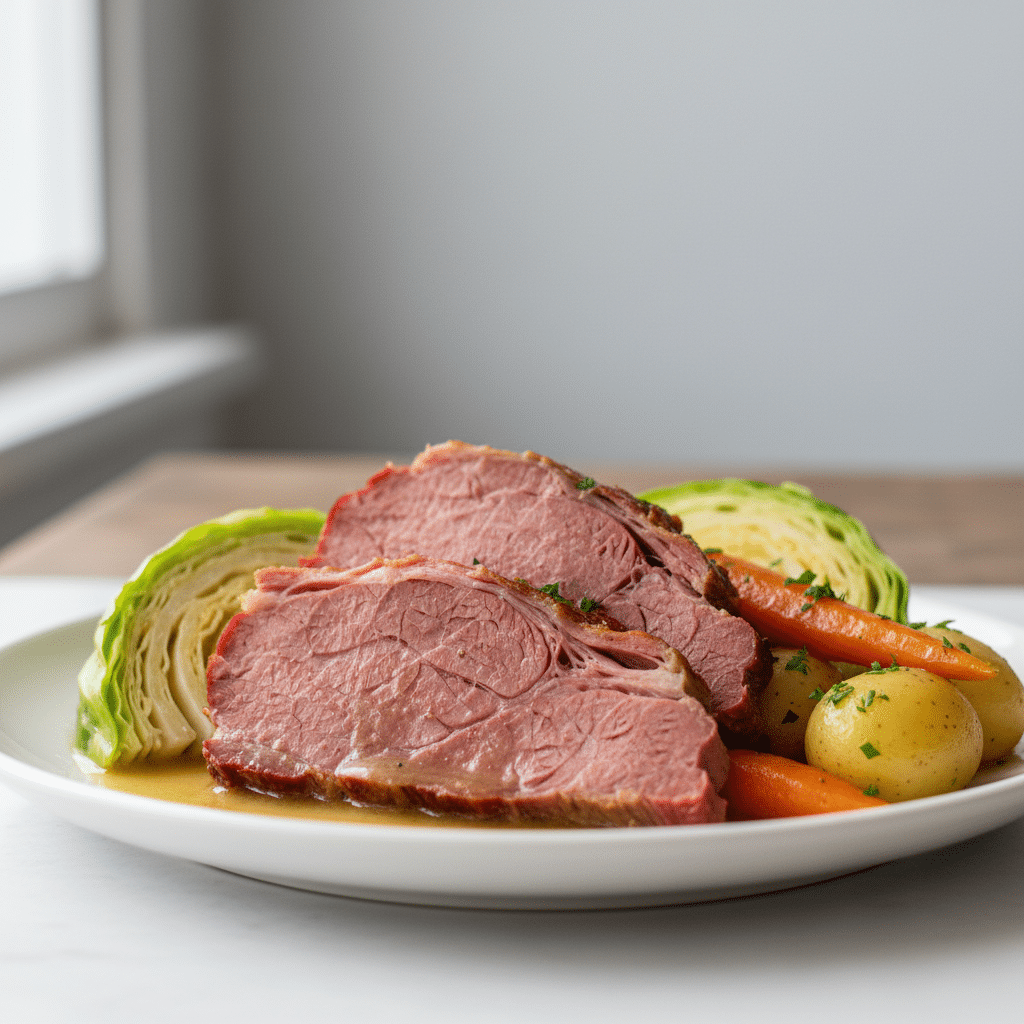
Arrange sliced corned beef on a large serving platter surrounded by the tender vegetables. Ladle some of the flavorful cooking broth over everything to keep it moist and add extra flavor. Garnish generously with fresh chopped parsley for a pop of color and fresh flavor.
This corned beef recipe makes a complete meal on its own, but you can round it out with crusty whole grain bread or Irish soda bread for soaking up the delicious broth. A small side of whole grain mustard or horseradish sauce provides a spicy kick that complements the rich meat beautifully.
For a lighter presentation, serve the sliced corned beef over a bed of the cabbage with vegetables on the side. The cooking liquid makes an excellent base for a simple soup the next day – just add more vegetables and perhaps some barley or lentils for a hearty second meal.
Recipe Variations
Slow Cooker Method: Place the rinsed corned beef in a slow cooker with spices and enough water to nearly cover. Cook on low for 8-10 hours or high for 4-5 hours. Add vegetables during the last 2 hours on low or 1 hour on high.
Instant Pot Corned Beef: Pressure cook the corned beef with spices and 3 cups water on high pressure for 90 minutes with natural release. Remove meat, add vegetables, and pressure cook for 4 more minutes with quick release.
Roasted Version: After simmering the corned beef until tender, transfer it to a roasting pan. Brush with a mixture of whole grain mustard and a touch of honey, then roast at 375°F for 15-20 minutes to create a flavorful crust. Roast the vegetables separately with olive oil and herbs.
Additional Vegetables: Turnips, parsnips, and rutabaga are excellent additions that were common in traditional boiled dinners. Add them at the same time as the carrots for best results.
Storage and Meal Prep Tips
Store leftover corned beef and vegetables separately in airtight containers in the refrigerator for up to 4 days. Keep some of the cooking liquid to reheat the meat and vegetables, which prevents them from drying out.
The corned beef actually improves in flavor after a day in the refrigerator, making this an excellent make-ahead option. Slice only what you need and keep the remaining brisket whole to maintain moisture.
Freeze sliced corned beef in portion-sized containers with a little cooking liquid for up to 3 months. Thaw overnight in the refrigerator and reheat gently on the stovetop or in the microwave. The vegetables don't freeze as well due to their high water content, so plan to consume those within the 4-day refrigerator window.
Leftover Ideas
Transform leftover corned beef and cabbage into entirely new meals throughout the week. Dice the meat and vegetables for a hearty hash – simply sauté with a little olive oil until crispy and top with a fried egg for breakfast or brunch.
Corned beef makes exceptional sandwiches. Layer thin slices on whole grain bread with sauerkraut, Swiss cheese, and mustard for a healthy twist on a Reuben. The leftover cabbage can be quickly fermented into a simple sauerkraut or added to soups and stir-fries.
Use the cooking liquid as a base for cabbage soup. Add more vegetables, beans or lentils, and diced leftover corned beef for a satisfying soup that captures all the flavors of the original meal. The mineral-rich broth is too valuable to discard.
Tips for the Best Results
Choose Quality Meat: Select a well-marbled corned beef brisket with good fat distribution. The fat renders during cooking and keeps the meat moist and flavorful. Grass-fed options provide better nutritional profiles when available.
Low and Slow: Never let the cooking liquid come to a rolling boil. A gentle simmer produces tender, juicy meat. Boiling makes the meat tough and stringy.
Don't Overcook the Cabbage: Cabbage can quickly go from tender to mushy and develop an unpleasant sulfur smell. Add it during the last 15-20 minutes only, and remove the pot from heat as soon as it's fork-tender.
Test for Doneness: The corned beef should register at least 145°F internally, but for that fall-apart texture, aim for around 190-200°F. Use a meat thermometer for accuracy.
Save That Broth: The cooking liquid is liquid gold. Strain it, skim excess fat if desired, and use it within 3 days or freeze for up to 3 months. It makes an incredible base for soups, stews, or cooking grains.
Nutritional Highlights
This corned beef and cabbage recipe provides a balanced combination of protein, complex carbohydrates, and vegetables. A typical serving delivers approximately 350-400 calories with 25-30 grams of protein, making it satisfying and supportive of muscle maintenance and satiety.
The cabbage family vegetables provide glucosinolates, plant compounds studied for their potential health-protective properties. Combined with the vitamin C from both cabbage and potatoes, this meal supports immune function and collagen production.
While corned beef is higher in sodium due to the curing process, the homemade preparation allows you to control additional salt. The abundance of potassium-rich vegetables (potatoes, cabbage, carrots) helps balance sodium intake. Drinking plenty of water with this meal supports healthy fluid balance.
Why This Recipe Works
The magic of this corned beef recipe lies in its simplicity and the way flavors develop during the long, gentle cooking process. The curing spices in the corned beef gradually infuse the cooking liquid, which then flavors the vegetables as they cook. This creates a cohesive dish where every component tastes connected.
The different cooking times for each vegetable ensure everything reaches perfect tenderness simultaneously. Carrots need longer to soften, potatoes are somewhere in the middle, and cabbage requires the shortest time. This staged approach prevents mushy vegetables while ensuring nothing remains undercooked.
The resting period for the meat isn't just tradition – it's science. As the meat cools slightly, the proteins relax and reabsorb moisture, resulting in juicier slices. Slicing against the grain then maximizes tenderness by shortening the muscle fibers.
Conclusion
This corned beef and cabbage recipe proves that traditional comfort food can also be wholesome and nourishing. The combination of tender, flavorful meat with hearty vegetables creates a satisfying one-pot meal perfect for St Patrick's Day celebrations or any time you're craving something warm and filling.
The straightforward cooking method requires minimal hands-on time, making it ideal for feeding a crowd without spending hours in the kitchen. Plus, the leftovers transform beautifully into multiple meals throughout the week, maximizing both your time and food budget.
Whether you're honoring Irish-American traditions or simply exploring classic boiled dinner recipes, this corned beef and cabbage delivers on flavor, nutrition, and comfort. Give it a try this March or any month when you need a hearty, crowd-pleasing meal that brings everyone together around the table.
Corned Beef and Cabbage Recipe (St Patrick's Day Classic)
Tender corned beef simmered with cabbage, carrots, and potatoes for a hearty, crowd-pleasing March dinner.
Ingredients
- 3 to 4 pound corned beef brisket with spice packet
- 10 cups water
- 1 head green cabbage, cut into wedges
- 1 pound carrots, peeled and cut into chunks
- 2 pounds small potatoes, halved
- 1 onion, quartered
- 3 cloves garlic, smashed
- 2 bay leaves
- Salt and pepper to taste
Instructions
- Place the corned beef brisket in a large pot or Dutch oven and add the water, ensuring the meat is covered. Add the spice packet, onion, garlic, and bay leaves.
- Bring to a boil over high heat, then reduce heat to low. Cover and simmer for 2 1/2 to 3 hours, or until the corned beef is fork-tender.
- Remove the corned beef from the pot and set aside, covered with foil to keep warm.
- Add the potatoes and carrots to the cooking liquid. Bring to a boil and cook for 10 minutes.
- Add the cabbage wedges to the pot and cook for an additional 10 to 15 minutes, until all vegetables are tender.
- Slice the corned beef against the grain into thin slices.
- Serve the sliced corned beef with the cooked vegetables. Ladle some of the cooking liquid over the meat and vegetables if desired. Season with salt and pepper to taste.
Equipment
- Large pot or Dutch oven
- Sharp knife
- Cutting board
- Tongs
- Serving platter
Notes
- The corned beef can be cooked a day ahead and reheated in the cooking liquid.
- For extra flavor, you can add a bottle of beer or a splash of apple cider vinegar to the cooking liquid.
- Leftovers make excellent sandwiches on rye bread with mustard.
- If your corned beef doesn't come with a spice packet, use 1 tablespoon pickling spice.